
Brief biography
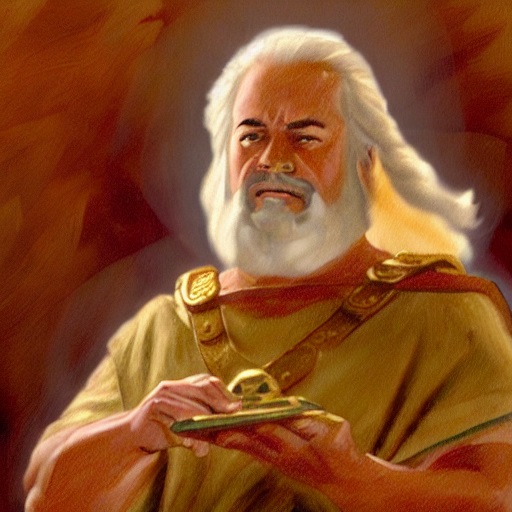
Zenos was an Israelite prophet whose writings were recorded on the plates of brass. Selections of his words are found in a prophecy cited by Nephi (1 Nephi 19:11-17), his olive allegory reproduced by Jacob (Jacob 5:2-77), and a prayer quoted by Alma to the Zoramites (Alma 33:4-11). Only the resurrected Jesus and Isaiah are cited more than Zenos by Book of Mormon speakers.
Total recorded words -- 4,283
Insights into words and phrases

Mormon states that, like Zenock, he was a Nephite ancestor, although it is
unknown whether he was from the tribe of Ephraim or Manasseh (3 Nephi
10:16). Evidenced by a selection of his writings, Zenos appears to have been
an Israelite prophet who likely preached sometime between David’s conquest
of Jerusalem and the fall of the northern kingdom of Israel.1
According to Nephi the son of Helaman, Zenos testified boldly about the
coming of Christ; after which, he was slain (Helaman 8:19).
Given the subject of his olive allegory (Jacob 5), it is not
surprising to find that agricultural vocabulary is abundant, with the words
"vineyard" (57 times), "fruit" (56), "natural fruit" (10), "tree" (51),
"trees" (16), "branches" (35), "natural branches" (13), and "roots" (17).
Verbs relating to actions taken in relation to the vineyard with its trees
include "brought" (23), "cast" (17), "nourished" (16), "graft" (14),
"become" (13), "preserve" (13), "bring" (11), "lay up" or "lay it up" (11),
"labor" (9), and "perish" (9). The title "God of nature" (1 Nephi 19:12) is
only used by Zenos. Zenos is second only to Mormon (33) in the number of
statistically significant phrases (31). This is even more notable because
Zenos has fewer words (4,272) compared to Mormon (96,935).
Personal application
A comparison of the words of Zenos with those of other writers quoted from
in the Book of Mormon, indicates that he was one of the most significant
sources of prophetic teachings in the Nephite literary corpus. As we read
the words of Zenos throughout the Book of Mormon, we can come to more fully
appreciate the rich scriptural heritage contained in the plates of brass.
1 David Rolph Seely and John W. Welch, "Zenos and the Texts of
the Old Testament," in Stephen D. Ricks and John W. Welch, eds.,
The Allegory of the Olive Tree: The Olive, the Bible, and Jacob 5
(Salt Lake City: Deseret Book and the Foundation for Ancient Research and
Mormon Studies, 1994), 322-46.
Mountains Carried Up
Zenos prophesied that one of the signs given to the house of Israel of the
Lord’s death would be "mountains which shall be carried up" (1 Nephi 19:11).
The Exodus story tells how Mount Sinai was considered holy because it was
the place where the Lord Himself came down in power and glory. When the
glory of the Lord’s presence was manifest on the mountain, the children of
Israel were unprepared and very afraid. Only those who were righteous were
permitted to ascend the mount and be in the Lord’s presence (Exodus 24:1,
9-11, 15).
Mountains were traditionally considered sacred,
because they were closer to God, and immovable. The movement of mountains
through earthquake was something that was beyond the capacity of man and
signified God’s power, as it did at Mount Sinai. Zenos indicates that divine
power would be manifest at the time when the Lord delivered His people from
sin and death, similar to the time when He brought the children of Israel
out of Egyptian bondage.
Mount Sinai was a place where the Lord
manifested Himself in glory before His people. Those who were unprepared or
unworthy could not abide in the divine presence. So Zenos’ prophecy that
mountains would be "carried up" at the day of the Lord’s death indicates
that something else impossible to mortals would be done by God---His
deliverance of man from death.
Personal application
The Exodus story shows how only the righteous and prepared could abide the Lord’s presence on the mountain. Similarly, as Zenos’ prophecy suggests, only some would be prepared for the Lord’s visitation at the time of His death. When you read about the signs of the Lord’s death in the prophecy of Zenos, ponder how you can more fully prepare yourself for the Lord’s second coming.
When Mountains Move
|
Take heed to yourselves, that ye go not up into the
mount, or touch the border of it: whosoever toucheth the
mount shall surely be put to death
(Exodus 19:12). And the whole mount quaked greatly (Exodus 19:18). |
And by mountains which shall be carried up. And all these things must surely come, saith the prophet Zenos. And the rocks of the earth must rend; and because of the groanings of the earth, many of the kings of the isles of the sea shall be wrought upon by the Spirit of God to exclaim: The God of nature suffers (1 Nephi 19:11-12). |
Opening of the Earth
One of the signs of the Lord’s death that would be witnessed by the house of
Israel was "the opening of the earth" (1 Nephi 19:11). God had
previously told Moses that He would visit the children of Israel according
to their future sins. One remarkable example of such a visitation occurred
during the rebellion of Korah and his followers.
The book of Numbers tells of a rebellion led by Korah and his followers, in
which they tried to usurp divine authority and power from Moses. Moses
responded, "If these men die the common death of all men, or if they be
visited after the visitation of all men; then
the Lord hath not sent me. But if the Lord make a new thing, and the
earth open her mouth, and swallow them up, with all that
appertain unto them, and they go down quick into the pit; then ye shall
understand that these men have provoked the Lord" (Numbers 16:29-30).
We are then told that the rebels were visited with destruction when the "earth opened
her mouth and swallowed them up" (Numbers 16:32-35; 26:10). We are also told
that these wicked people and their fate "became a sign" for
the children of Israel to remember (Numbers 26:10). It is very significant,
then, that Zenos mentions that the "opening of the earth" would be a sign to
the house of Israel of the Lord’s death.
Personal application
"The opening of the earth" (1 Nephi 19:11), a sign of the Lord’s death given
by the prophet Zenos, resembles the fate of Korah and his followers during
the sojourn of the Israelites in the wilderness. Significantly, that event
was specifically said to be a sign to the house of Israel. Zenos teaches
that it was a sign of the Lord’s death. When you read the prophecy of Zenos,
consider how the events of Israel’s history point to the Savior and His
redemption.
Death swallows us all, but through the grace and merciful intercession of
Jesus Christ, we all can be redeemed from the grave and, through diligent
effort and faith in Him, receive eternal life.
Zenos and the Korah Rebellion
|
Thou stretchedst out thy right hand, the
earth swallowed them
(Exodus 15:12). If these men die the common death of all men, or if they be visited after the visitation of all men; then the Lord hath not sent me. But if the Lord make a new thing, and the earth open her mouth and swallow them up, with all that appertain unto them, and they go down quick into the pit; then ye shall understand that these men have provoked the Lord (Numbers 16:29-30). And the earth opened her mouth, and swallowed them up, and their houses, and all the men that appertained unto Korah, and all their goods. They, and all that appertained to them, went down alive into the pit, and the earth closed upon them: and they perished from among the congregation. And all Israel that were round about them fled at the cry of them: for they said, Lest the earth swallow us up also. And there came out a fire from the Lord, and consumed the two hundred and fifty men that offered incense (Numbers 16:32-35). This is that Dathan and Abiram, which were famous in the congregation, who strove against Moses and against Aaron in the company of Korah, when they strove against the Lord: And the earth opened her mouth, and swallowed them up together with Korah, when that company died, what time the fire devoured two hundred and fifty men: and they became a sign. (Numbers 26:9-10). |
And by the opening of the earth (1 Nephi 19:11). |
Rejecting the Holy One of Israel
The Lord manifested many signs and wonders before the people when He
delivered the children of Israel from Egypt and led them through the
wilderness. The Lord told Moses, "I will harden Pharaoh’s heart and multiply
my signs and wonders in the land of Egypt" (Exodus 7:3). We are also told
that "Moses and Aaron did all these wonders before Pharaoh: and the Lord
hardened Pharaoh’s heart" (Exodus 11:10; see also Deuteronomy 4:34; 6:22;
7:19; 26:8). In spite of these things and the many miracles He performed,
the Israelites frequently murmured and rebelled against God. When they built
a golden calf, the Lord told Moses, "they have turned aside quickly out of
the way which I commanded them" (Exodus 32:8). On another occasion, God told
them that because of their many sins, "your children shall wander in the
wilderness" (Numbers 14:33).
Zenos uses phrases from these
earlier stories to tell how, during His mortal ministry at Jerusalem, the
Lord’s people would "turn their hearts aside," like Pharaoh "rejecting signs
and wonders and the power and glory of the God of Israel" (1 Nephi
19:13-14). As a result of this, many "shall wander in the flesh and perish"
(1 Nephi 19:14). This connection with the wilderness apostasy is
strengthened by the fact that Zenos refers to "turning aside" three times in
this prophecy (1 Nephi 19:13-15). By drawing upon the language of the Exodus
and wilderness accounts, Zenos frames the rejection of Israel’s Redeemer
during His mortal ministry, as repeating the lamentable pattern of the past.
Personal application
The prophecy of Israel’s rejection of the Son of God shows that Israel would reject and turn aside from their Redeemer, just as their ancestors had done in the wilderness. As you read these words of Zenos, ponder how you can prevent your heart from turning aside, and keep it fixed on the words of our Redeemer, who is gathering Israel again in our day.
Israel’s Apostasy
| They have turned aside quickly out of the way which I commanded them (Exodus 32:8). |
[Those at Jerusalem] turn their hearts aside (1 Nephi
19:13). And because they turn their hearts aside (1 Nephi 19:14). |
| And your children shall wander in the wilderness (Numbers 14:33). | They shall wander in the flesh, and perish (1 Nephi 19:14). |
|
And I will harden Pharaoh’s heart, and multiply my
signs and wonders in the land of Egypt
(Exodus 7:3). And the Lord said unto Moses, Pharaoh shall not hearken unto you; that my wonders may be multiplied in the land of Egypt. And Moses and Aaron did all these wonders before Pharaoh: and the Lord hardened Pharaoh’s heart, so that he would not let the children of Israel go out of his land (Exodus 11:9-10; see also Deut. 4:34; 6:22; 7:19; 26:8). |
[They] turn their hearts aside, rejecting signs and wonders, and the power and glory of the God of Israel (1 Nephi 19:13) |
| They have turned aside quickly out of the way which I commanded them (Exodus 32:8). |
[Those at Jerusalem] turn their hearts aside (1 Nephi
19:13). And because they turn their hearts aside (1 Nephi 19:14). |
| And your children shall wander in the wilderness (Numbers 14:33). | They shall wander in the flesh, and perish (1 Nephi 19:14). |
Remembering the Covenant Made with the Fathers
Making the golden calf was a grievous transgression, for which the Lord
could have utterly destroyed the children of Israel. At that time, Moses
pled with the Lord to be merciful and "remember Abraham,
Isaac, and Israel, thy servants, to whom thou swarest by thine
own self" (Exodus 32:13). This plea that the Lord might be merciful and
remember His ancient covenants is echoed in the prophecy of Zenos.
After he describes how Israel would turn their hearts aside,
reject the Son of God, and be scattered, Zenos states, "Nevertheless, when
the day cometh that they no more turn aside their hearts against the Holy
One of Israel, then will he remember the
covenants which he made to their fathers" (1 Nephi 19:15).
Zenos’ words neatly tie the covenant the Lord made with Abraham, Isaac, and
Israel---which Moses pleaded to God to remember, even when Israel had sinned
a grievous sin---with the promise that in the latter days, God would indeed
remember the covenant with the fathers. This shows that, although they had
once rejected Him, the Lord would not forget His people, but would
eventually gather them in mercy.
Personal application
Zenos’s teaching that the Lord would remember the ancient covenant made with the fathers, Abraham, Isaac, and Jacob, reminds us of how merciful the Lord has been and will be, if we will no longer turn aside our hearts from His words. He is our Redeemer and, in spite of our sins, is anxious to receive us when we are willing. Wherever we are, if we turn to God, He will welcome us with love and forgiveness.
| Remember Abraham, Isaac, and Israel, thy servants, to whom thou swarest by thine own self (Exodus 32:13). | Nevertheless, when the day cometh, saith the prophet, that they no more turn aside their hearts against the Holy One of Israel, then will he remember the covenants which he made to their fathers (1 Nephi 19:15). |
The Prophecy of Zenos (1 Nephi 19:10-17)
Zenos’ prophecy cited by Nephi (1 Nephi 19:10-17) uses words from accounts
of the Israelite Exodus from Egypt and their wilderness journey. He applies
them, however, to the signs of the Lord’s death, His rejection by the house
of Israel, and their latter-day redemption. His words suggest that he viewed
these things as a continuation of the miraculous events witnessed by the
Exodus generation, in fulfillment of the covenants God made with their
fathers. This is shown in subsequent examples, which include
Visiting the House of Israel, Thunder and Lightning, Fire and Smoke,
Mountains Carried Up, Opening of the Earth, Three Days of Darkness,
Rejecting the Holy One of Israel,
and Remembering the Covenant.
Personal application
These examples help us to understand that the Lord’s work is not done and that He remembers His promises. They also show that the story of the house of Israel is not complete, but continues, and that we each are part of that story. We can look to our Redeemer today, with hope and an expectation of great joy, as we prepare for His return.
Three Days of Darkness
When the Lord brought the children of Israel out of Egypt, He caused three
days of darkness to cover the land. "And there was thick darkness in all the
land of Egypt three days: They saw not one another, neither rose any from
his place for three days: but all the children of Israel had light in their
dwellings" (Exodus 10:21-23). The prophet Zenos stated that three days of
darkness "should be a sign given of his [the Lord’s] death unto those who
should inhabit the isles of the sea, more especially given unto those who
are of the house of Israel" (1 Nephi 19:10).
The Lord, through
Moses, provided the darkness at the time of Israel’s deliverance from cruel
bondage. Zenos indicates that three days of darkness, obviously intended to
remind Israel of the Egyptian deliverance, would be a sign of the Lord’s
death, an event that would bring about deliverance from death and sin.
During the darkness in Egypt, Israel had light in their dwellings; but in
the sign mentioned by Zenos, Israel would also experience the darkness, a
reminder that the God of Israel would suffer for the sins of His people and
that they must look to Him as the source of light and life.
Personal application
As you read the prophecy of Zenos, ponder how the Lord can bring light to us in times of darkness, and remember that ultimately, He is the only true source of light to guide us and lead us away from choices that would drag us down to darkness and misery.
Darkness as a Sign to the House of Israel
| Stretch out thine hand toward heaven, that there may be darkness over the land of Egypt, even darkness which may be felt. And Moses stretched forth his hand toward heaven; and there was thick darkness in all the land of Egypt three days: They saw not one another, netherneither rose any from his place for three days: but all the children of Israel had light in their dwellings (Exodus 10:21-23). | He spake concerning the three days of darkness, which should be a sign given of his death unto those who should inhabit the isles of the sea, more especially given unto those who are of the house of Israel (1 Nephi 19:10). |
Thunder and Lightning, Fire and Smoke
Zenos prophesied that the Lord would visit the some of the house of Israel
with "thunderings and the lightnings of his
power, by tempest, by fire, and by smoke" (1
Nephi 19:11). These point back to the events at Mount Sinai, where the mount
quaked and "there were thunders and
lightnings, and a thick cloud upon the mount" (Exodus 19:16).
This occurred when the Lord appeared upon the mount in glory and power. "And
mount Sinai was altogether on a smoke, because the Lord
descended upon it in fire: and the smoke thereof
ascended as the smoke of a furnace, and the whole mountain
quaked greatly" (Exodus 19:18). At this time, the children of Israel were
very afraid and unprepared for this experience (Exodus 19:16). Zenos draws
upon the wording of the Sinai event in his prophecy to teach how, at the
time of the Lord’s atoning deliverance, as at that earlier event in the
wilderness, many would be unprepared for His visit to His people.
Personal application
Zenos clearly draws upon the wording of the events at Sinai to teach about the Lord’s visitation at the time of His death. His prophecy was a warning to the house of Israel to prepare for the promised joyful visitation of the Lord to His people, in the day of atoning deliverance. As you read this prophecy, looking forward to the future return of the Lord, ponder how you can prepare for that day, so that it will be a day of great joy and salvation, not one of sorrow.
Sinai and Zenos
|
And it came to pass on the third day in the morning, that there
were thunders and lightnings, and a thick cloud upon
the mount . . . And mount Sinai was altogether on a smoke because the Lord descended upon it in fire and the smoke thereof ascended as the smoke of a furnace (Exodus 19:16, 18). |
Others with the thunderings and the lightnings of his power, by tempest, by fire, and by smoke, and vapor of darkness (1 Nephi 19:11). |
Visiting the House of Israel
The words of Zenos’ prophecy cited by Nephi (1 Nephi 19:11) evoke the events
of the Israelite Exodus from Egypt and their wilderness journey. Zenos
prophesied that "the Lord God surely shall visit all the house of Israel at
that day, some with his voice because of their righteousness,
unto their great joy and salvation," while "others" would be visited by
destructive forces of nature (1 Nephi 19:11). This prophecy of two kinds of
visitation has roots in the Exodus story and the subsequent account of
events in the wilderness.
Before his death in the land of Egypt,
Joseph the son of Jacob, who was Zenos’ patriarchal and tribal ancestor,
told his brothers, "God will surely visit you" (Genesis
50:24-25). As a descendant of Joseph, Zenos would have been familiar with
Joseph’s words. Many years later, when the Lord called Moses to lead Israel
out of Egyptian bondage, He said, "I have
surely visited you" (Exodus 3:16). When Moses conveyed these
words to the elders, "the people believed: and when they heard that the Lord
had visited the children of Israel, and that he had looked
upon their affliction, then they bowed their heads and worshipped" (Exodus
4:31). When the Israelites camped at Mount Sinai, the Lord came down in
glory on the mount. Then, "Moses spake, and God answered him by a
voice" (Exodus 19:19). Moses was righteous and was then
permitted to go up into the Lord’s presence, while the other children of
Israel were not and were afraid (Exodus 19:16, 21).
When the
Israelites rebelled and built a golden calf, the Lord also told Moses,
"whosoever hath sinned against me, him will I blot out of my book. Therefore
now go, lead the people unto the place of which I have spoken unto thee: . .
. Nevertheless in the day when I visit I will
visit their sin upon them" (Exodus 32:33-34). This was
fulfilled at various times in their desert journey when the people rebelled.
Zenos, in his prophecy, draws upon words from these stories to show how, at
a time of future rebellion and apostasy, the Lord would visit His people
again at the time of His death, both the righteous and the wicked.
Personal application
It makes sense that Zenos, a prophet of the lineage of Joseph, would use the language of his tribal ancestor, as well as words and themes from the Exodus deliverance account, in a prophecy of the Savior’s deliverance of His people from the bondage of sin and rebellion. As you read the words of Zenos, consider how the Lord is blessing you today, in ways that continue to fulfill His promises to the house of Israel.
Two Kinds of Visitation
| And Joseph said unto his brethren, I die: and God will surely visit you, and bring you up out of this land unto the land which he sware to Abraham, to Isaac, and to Jacob. And Joseph took an oath of the children of Israel, saying, God will surely visit you, and ye shall carry up my bones from hence (Genesis 50:24-25). | The Lord God surely shall visit all the house of Israel at that day (1 Nephi 19:11). |
|
I have surely visited you and seen that which is done to you
in Egypt
(Exodus 3:16). And the people believed: and when they heard that the Lord had visited the children of Israel, and that he looked upon their affliction, then they bowed their heads and worshipped (Exodus 4:31). And when the voice of the trumpet sounded long, and waxed louder and louder, Moses spake, and God answered him by a voice (Exodus 19:19). |
Some with his voice because of their righteousness, unto their great joy and salvation (1 Nephi 19:11). |
| Whosoever hath sinned against me, him will I blot out of my book. Therefore now go, lead the people unto the place of which I have spoken unto thee: behold, mine Angel shall go before thee: nevertheless in the day when I visit I will visit their sin upon them (Exodus 32:34). | [Zenos prophesied that others would be visited (1 Nephi 19:11). From the context, these others are the wicked in Israel.] |


