
Brief biography
circa 600 B.C.
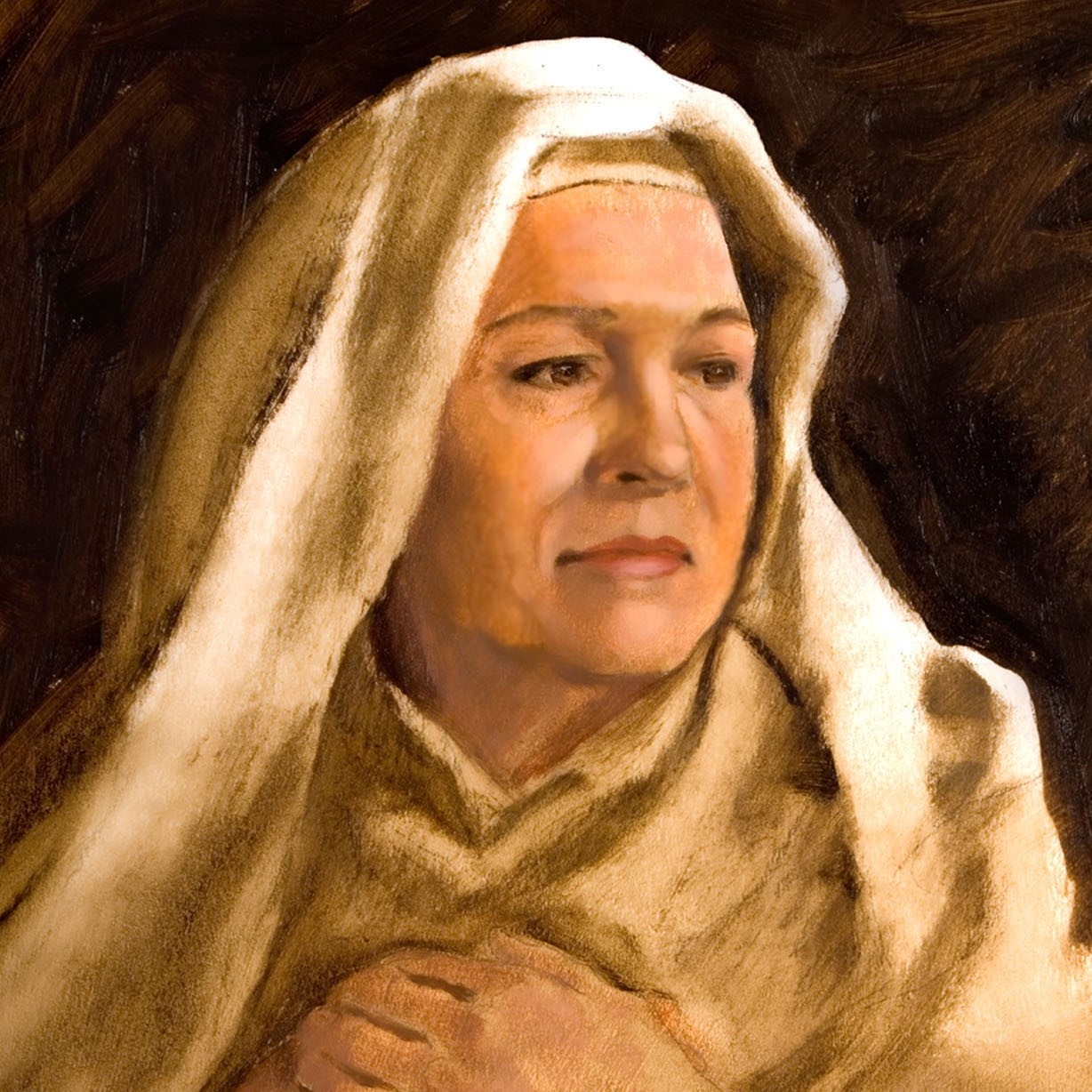
Sariah was the wife of Lehi and the faithful mother of six sons and at least two daughters. She lived in Jerusalem with her family and departed Jerusalem with her husband, when he was warned of God that his life was in danger. While at their camp in the Valley of Lemuel, when her sons were sent up to Jerusalem to obtain the plates of brass, Sariah, fearing for their lives, initially murmured against her husband. When they returned, she bore testimony of the Lord's blessings and her husband's prophetic call. While traveling through the wilderness, she gave birth to two sons, Jacob and Joseph. During the family's journey crossing the ocean, Sariah suffered greatly due to the rebellious actions of Laman and Lemuel, and she and her husband nearly died. She died sometime after their arrival in the land of promise.
Total recorded words -- 82
Insights into words and phrases

When Sariah murmured against her husband, she called him a "visionary man"
and complained that he had led them into the wilderness, where she feared
they might perish. The term "visionary man," a term Laman and Lemuel also
applied to their father, is noteworthy (1 Nephi 2:11).
Sariah’s contemporary, Jeremiah, warned of false prophets who gave false
dreams and who spoke "after the vision of their own heart" (Jeremiah 23:16).
Unlike Jeremiah, the false prophets proclaimed peace and did not believe
that Jerusalem would be destroyed. Jeremiah taught that true prophets, like
himself, in contrast to false prophets, had actually stood in the Lord’s
heavenly council where they had received their message directly from God
(Jeremiah 23:18, 21-22).
Lehi’s words, responding to his wife’s complaint, reflect the context of
Jeremiah’s prophecy when he says, "I know that I am a visionary man; for if
I had not seen the things of God in a vision I should not have known
the goodness of God, but had tarried at Jerusalem, and had perished with my
brethren" (1 Nephi 5:4). Lehi, unlike the false prophets of his day, had
actually seen a true vision and had, in fact, met the criteria given by
Jeremiah to have stood in the Lord’s heavenly council to receive the
prophetic word (1 Nephi 1:8-15, 18-19). He had faithfully declared that
message and then fled Jerusalem because the Lord commanded him to do so.
This obedience brought protection.
Sariah’s words fit into the context of Jeremiah’s day, and Lehi’s gentle
response to her concerns shows how the guiding words of prophets bring
comfort and assurance, and can help us distinguish the true prophets from
those who are not.
Chronology
All dates are approximate.
Before 597 B.C. Sariah lives at Jerusalem with her husband Lehi.
597 B.C. Sariah departs from Jerusalem with Lehi and her family.
597-596 B.C. Concerned for the safety of her sons, who were sent to
Jerusalem to obtain the plates of brass, Sariah murmurs against her husband,
who comforts her. When her sons return safely, she testifies of Lehi’s
prophetic call and the blessings of God.
596-587 B.C. Sariah travels with Lehi and her family through the
wilderness. She gives birth to two sons, Jacob and Joseph.
587 B.C. Sariah suffers greatly and comes close to death, during the
ocean crossing to the land of promise, due to the rebellion of Laman and
Lemuel and the sons of Ishmael. She arrives in the land of promise with her
family.
After 586 B.C. Sariah dies.


