
Brief biography
circa 600 B.C.-585 B.C.
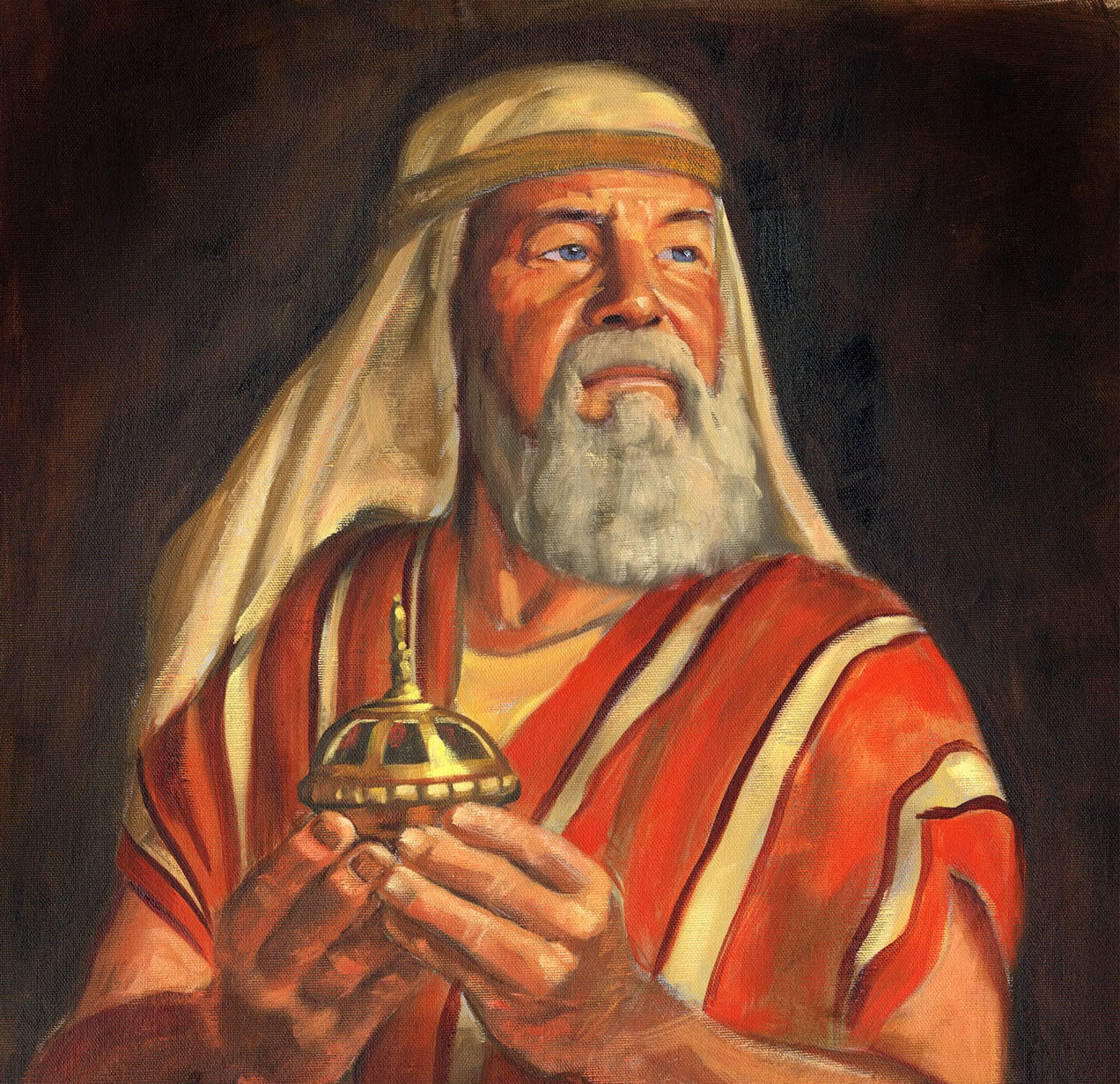
The prophet Lehi was a contemporary of Jeremiah and called to preach repentance to the people of Jerusalem during the first year of the reign of Zedekiah, King of Judah (600 B.C.). After his message was rejected, his life was in danger, and the Lord commanded him to flee from his homeland. He led his family on a journey through the wilderness to a new land of promise in the Americas. Some of his revelations and teachings were recorded by his son Nephi in the Book of Mormon. These include his divine call, his vision of the tree of life, teachings about the coming of the Messiah, and prophecies about his children and their descendants. His family was greatly blessed by God, but often experienced conflict, stemming from the rebellion of his oldest sons, who were jealous of their brother Nephi and did not believe his prophetic teachings or those of their father.
Total recorded words -- 4,665
Insights into words and phrases

In addition to the fruit of the tree of life, which he saw in his vision,
Lehi’s words also focus on his own fruit---his seed, his sons, and children
are favored topics. He is interested in blessings, and his teachings and
prophecies center around the covenants God made with the house of Israel and
with him.
Lehi is the only speaker in the Book of Mormon to use
the word "opposition" (4).
Throughout his life, Lehi experienced
hard blows. The demands of his calling required that he abandon his
ancestral lands of inheritance and most of his possessions. He experienced
years of danger, affliction, and hunger (1 Nephi 16:19-32), and the death of
friends (1 Nephi 16:34-35). The frequent rebellions of Laman, Lemuel, and
the sons of Ishmael took their toll and, on at least one occasion, nearly
overwhelmed him (1 Nephi 18:17-18). He also recognized the blessings his
family had received and how merciful the Lord had been (2 Nephi 1:1-2).
Personal application
Lehi suffered many afflictions and experienced deep sorrow from the
rebellion and wickedness of Laman and Lemuel and the sons of Ishmael.
However, the knowledge of his Redeemer and the blessings of obedience
brought him great joy, allowing him to be "encircled about eternally in the
arms of his [Redeemer’s] love" (2 Nephi 1:15).
Lehi’s words
teach us that the Lord has the power to redeem us; to bring us through the
darkness that sometimes envelops and confuses us, back to the warm embrace
of His love. As you read Lehi’s words, ponder how often the Lord blessed him
and his family, even when their lives were hard. Try to be mindful of how
often he blesses you, including in challenging times.
Lehi and the Messiah
The word "Messiah" only appears twice in the King James translation of the
Hebrew Bible (Daniel 9:25-26). Lehi is the first Book of Mormon prophet to
teach about the Messiah. This term is also used by other early Nephite
writers, such as Nephi, Jacob, and Jarom, but is only found twice outside
the small plates. This indicates that it was a term used by early prophets
in the text, rather than later ones. Only Lehi, however, uses the words
"Holy Messiah" (2 Nephi 2:8). This divine title enhances our understanding
of the nature and role of Christ.
It may be significant that
Lehi uses the term "Holy Messiah" in a blessing given to his son Jacob. Lehi
blessed Jacob that his days would be "spent in the service of thy God" (2
Nephi 2:3). Jacob subsequently became a priest during the reign of his
brother Nephi (2 Nephi 5:26).
Holiness was a particularly
important principle for priests who officiated in the temple in ancient
Israel; the temple was holy and represented the presence of God. Just as the
animals that were offered in sacrifice needed to be without blemish, so the
Messiah who gave his life needed to be holy for his sacrifice to be
acceptable. It is only through the Holy Messiah that all can be made holy.
Personal application
The only way to become holy is "through the merits, and mercy, and grace of the Holy Messiah" (2 Nephi 2:8). He is our Redeemer and is "full of grace and truth" (2 Nephi 2:6). By obeying the truth set forth in his words, counsel, and commandments, we can receive power and strength to do better. Through the gift of the Holy Ghost, we can be sanctified.
The Great Mediator
Lehi is the only Book of Mormon prophet to use the term "Mediator," which he
does twice in one of his final sermons to his family. This may reflect his
family situation in his later life, which included so much strife between
his children and their families. Such conflict would have required him as a
father and leader to mediate, sometimes unsuccessfully, between rival
interests between his sons. In light of this, it may be significant that he
taught his children, shortly before his death, to look toward their Divine
Redeemer, "the great Mediator of all men" (2 Nephi 2:27-28).
Lehi counseled his sons to choose to look to the "great Mediator
of all men," rather than choose to be subject to "the captivity and power of
the devil" (2 Nephi 2:27). He taught them that they did so when they
hearkened to the great Mediator’s words and kept his commandments, which
lead to liberty and eternal life (2 Nephi 2:28).
Personal application
When we experience injustice and harm from others, it is easy to become bitter. Our captivity to bitterness can be crippling to our happiness, peace, and positive relationships with others. By looking to Jesus Christ, our great Mediator, and keeping his commandments, we can find liberty from much of the strife and inner turmoil that we experience. He knows how to comfort us, strengthen us, and give us power to forgive those who may have offended us. We thereby become true disciples of Christ, and we can know that our Mediator is also our friend.
Chronology
All dates are approximate.
Before 600 B.C. Lehi is a descendant of Manasseh who lives at
Jerusalem and has acquired great possessions.
600 B.C. In response to the warning of prophets, in the first year of
the reign of King Zedekiah of Judah, Lehi prays to God, is shown visions,
and is called by God to preach to the people. They reject his message and
seek to kill him. He flees Jerusalem with his family.
596-587 B.C. Lehi and his family are led through the wilderness and
across the sea to a land of promise.
Circa 585 B.C. Lehi dies.


