
Brief biography
Circa 592 B.C.-544+ B.C.
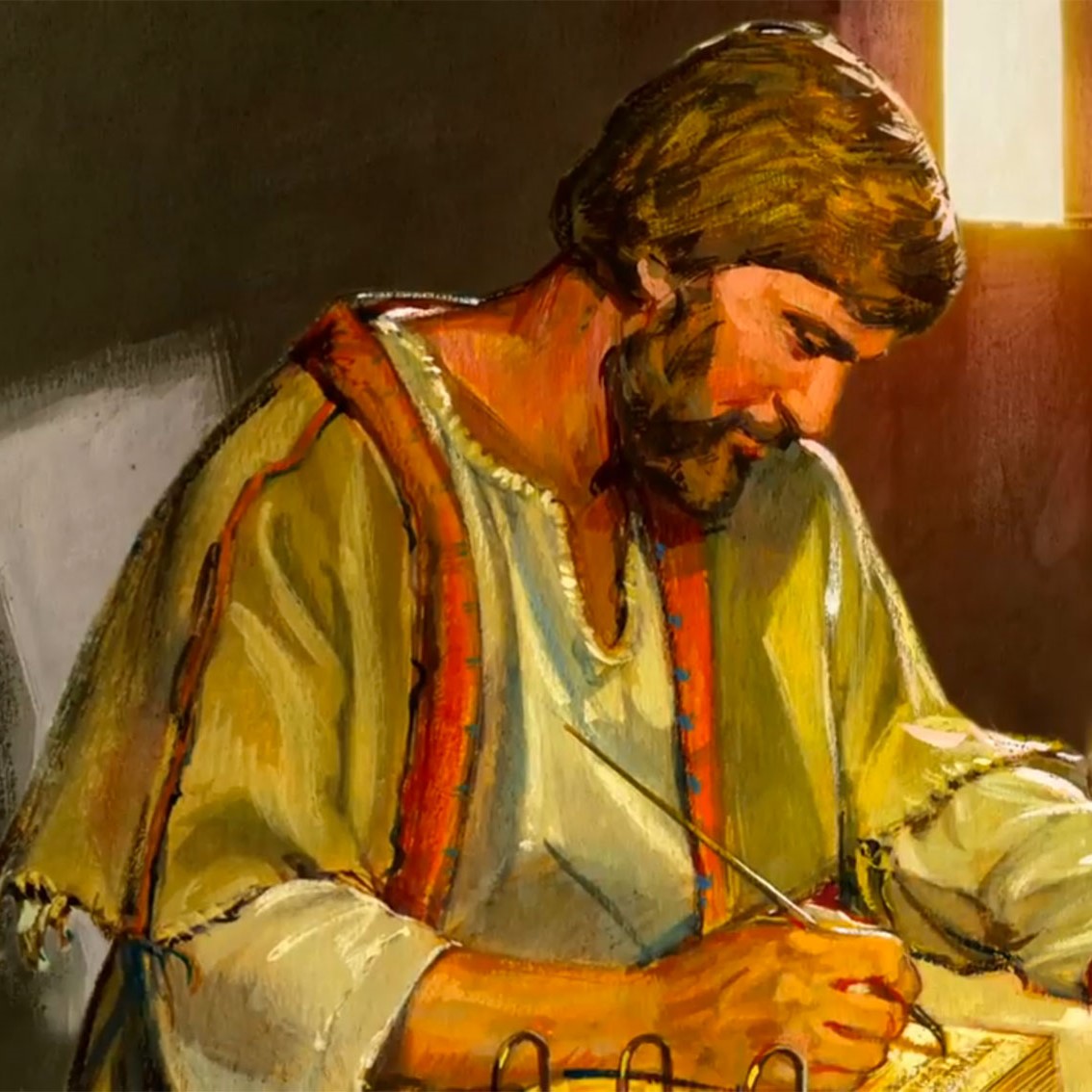
Jacob was Lehi’s fifth son and was born during the family’s difficult wilderness journey to the land of promise. When the family separated after the death of Lehi, Jacob followed his brother Nephi and was consecrated as a priest over Nephi’s people. Nephi recorded some of Jacob’s prophecies on the small plates, and following Nephi’s death, Jacob and his descendants continued to keep the record.
Total recorded words -- 8,503
Insights into words and phrases

Jacob refers to Christ's role as a creator more than any other Book of
Mormon speaker. He uses terms such as "Maker" (2 Nephi 9:40; Jacob 2:6),
"great Creator" (2 Nephi 9:5-6; Jacob 3:7), and "all-powerful Creator"
(Jacob 2:5). Jacob uses the divine title "Holy One of Israel" 17 times, more
than any other speaker in the Book of Mormon. Others who use the title
include Nephi (10 times), Isaiah in the Book of Mormon (7 times), Amaleki (2
times), Lehi (2 times), and Zenos (2 times). Significantly, all of these
titles are found in the words of writers on the small plates, except for 3
Nephi 22:5, where Jesus quotes Isaiah.
The phrase "the power of"
occurs 17 times in Jacob's writings. It is primarily used in reference to
God and His power manifested through His words, the atonement and
resurrection, justice, and the Holy Ghost. Only once does it refer to the
power of the devil.
Interestingly, among Book of Mormon
speakers, Jacob has the second highest number of exclusive words and
phrases. Exclusive words are words that he uses and no other speaker uses.
Only Isaiah in the Book of Mormon has more exclusive words (89), yet Jacob's
exclusive words appear at a rate of 85/10,000 words compared to Isaiah's
rate of 69/10,000 words. Although Isaiah's writing style and his message are
widely recognized as being unique, Jacob is actually a more unique speaker.
Jacob shows an ability to portray abstract concepts in vivid
images. His characterization of death, hell, the devil, and endless torment
as an "awful monster" is notable (2 Nephi 9:10, 19, 26). In his temple
sermon condemning sin, he speaks of "the piercing eye of the Almighty God"
(Jacob 2:10), and reminds the rich and proud that "with one glance of his
eye he can smite you to the dust" (Jacob 2:15). He fears that his words will
"enlarge the wounds of those who are already wounded" and will be like
"daggers placed to pierce [the] souls and wound [the] delicate minds" of the
vulnerable (Jacob 2:9).
Jacob talks more about his feelings than
other Book of Mormon speakers. His language often seems more personal and
intimate.1 In his parting blessing, Lehi indicates that Jacob had
been abused and treated harshly by his older brothers, Laman and Lemuel:
"And behold, in thy childhood thou hast suffered afflictions and much
sorrow, because of the rudeness of thy brethren" (2 Nephi 2:1). Yet, he had
also been blessed with a remarkable testimony of Christ: "And thou hast
beheld in thy youth his glory; wherefore, thou art blessed even as they unto
whom he shall minister in the flesh" (2 Nephi 2:4).
Jacob's
empathy, perhaps gained through his own earlier afflictions, is evident in
his words and manifests itself in a reluctance (based on his concern for the
vulnerable) to preach harsh messages, even when he must. He feels "weighed
down" (Jacob 2:3), it grieves him (Jacob 2:6-7), and it is a
burden (Jacob 2:9). This language provides a window into his
soul.
Personal application
Jacob's sensitive yet bold personality is evident in his words, a
characteristic of his style that sets him apart from other Book of Mormon
speakers. As you read about Jacob and study his words, ponder how you can be
kinder and more sensitive toward others in your teaching, without failing in
our duties and responsibilities to God.
1 John Tanner, in a study of Jacob's words, observes that "half
the [Book of Mormon] citations of 'anxiety' occur in the book of Jacob, and
over two-thirds of the references to 'grieve,' 'tender,' and 'shame' (or
their derivatives) appear in Jacob's writings. He is the only person to use
'delicate,' 'contempt,' and 'lonesome.' Likewise, only Jacob uses 'wound' to
refer to emotional, not physical, injuries, as in the rest of the Book of
Mormon. Similarly, he uses 'pierce' or its variants frequently (four of the
ten instances) and exclusively in a spiritual sense. Such lexical evidence
suggests an author who lives close to his emotions."
John S.
Tanner, "Literary Reflections on Jacob and His Descendants," in Monte S.
Nyman and Charles D. Tate, Jr.,
Jacob Through Words of Mormon: To Learn with Joy (Provo, Utah:
Religious Studies Center, 1990), 259-60.
Jacob and the Greatness of God
When Lehi blessed his son Jacob before his death, he noted that,
notwithstanding his afflictions, his son knew of "the greatness of God" (2
Nephi 2:2). Jacob’s knowledge of God’s greatness is indeed reflected in his
sermons to the people of Nephi. Jacob speaks of God’s "greatness" (2 Nephi
9:53). Three times, he speaks of "the great Creator" (2 Nephi 9:5-6; Jacob
3:7). He also speaks of "the greatness of the Holy One of Israel" (2 Nephi
9:40).
In addition to his characterization of the Lord as great,
Jacob draws attention to, and even marvels at, the many attributes of God
that make Him great. He speaks of the great "goodness of our
God" (2 Nephi 9:10), the great "holiness of our God" (2 Nephi
9:20), "the greatness of the mercy of our God" (2 Nephi 9:19,
53), his "great mercy" (Jacob 4:10), "the greatness and the
justice of our God" (2 Nephi 9:17), "his greatness and his
grace" (2 Nephi 9:53), his "great
condescensions unto the children of men" (Jacob 4:7; 2 Nephi
9:53), and the "great and marvelous . . . works of the Lord"
(Jacob 4:8). Significantly, he also speaks of the "great
plan of our God" (2 Nephi 9:13), His "great
plan of redemption" (Jacob 6:8), and rejoices in His great "covenants"
(2 Nephi 9:53) and great "promises," which He makes available
to His children (2 Nephi 10:9, 21).
Personal application
While other Book of Mormon speakers and writers use the words "great" and "greatness," Jacob applies these words to God and His characteristics with greater variety and frequency than any other Book of Mormon prophet. This is a significant theme that runs through Jacob’s teachings and is a distinct characteristic of his words, setting him apart from other Book of Mormon speakers. As you read Jacob’s words consider how it was that Jacob came to understand God’s greatness, in spite of his many afflictions and challenges. In what ways could you do similarly?
Jacob and the Temple
Lehi said that Jacob’s days would be "spent in the service of thy God" (2
Nephi 2:3), and Jacob and his younger brother Joseph were consecrated by
Nephi to be the first priests over the people of Nephi (2 Nephi 5:26).
Notably, Jacob’s vocabulary reflects this calling as a righteous priest.
Jacob uses the noun "atonement" eight times, more than any other
speaker in the Book of Mormon (2 Nephi 9:7, 25-26; Jacob 4:11-12; 7:12).
This term figures prominently in priestly texts, such as Leviticus, which
discuss Israelite sacrificial practices. References to "fatness," (2 Nephi
9:51), "first-fruits" (Jacob 4:11), Abraham’s offering of his son Isaac as a
symbol of the sacrifice of the Only Begotten Son of God (Jacob 4:5), and the
image of garments stained with blood (2 Nephi 9:44; Jacob 1:19), all evoke
the sacrifices and offerings of ancient temple worship. This background
seems to provide the context for many of Jacob’s teachings.
In
ancient Israel, the temple represented the presence of God and was
considered holy. Jacob uses the divine title "Holy One of Israel" 17 times,
more than any other speaker in the Book of Mormon. Others who use the title
include Nephi (10 times) Isaiah in the Book of Mormon (7 times), Amaleki (2
times), Lehi (2 times), and Zenos (2 times). Significantly, all of these are
found in the words of writers on the small plates, except for 3 Nephi 22:5,
where Jesus quotes Isaiah.
Righteous temple worship demanded
ritual purity, and deliberate preparation. Those who were not ritually pure
were not allowed to enter. Jacob speaks of the righteous being "clothed with
purity, yea, even with the robe of righteousness" (2 Nephi 9:14), which
recalls the whiteness of ancient priestly clothing. He vividly contrasts
uncleanliness or filthiness, sin, transgression, and guilt with holiness,
purity, and righteousness. Those who are unclean or filthy are cut off from
God’s presence, just as the ritually unprepared are shut out from the temple
(2 Nephi 9:6, 9). A certain knowledge of God’s holiness and the existence of
abominations and wickedness among his own people cause Jacob "to shrink with
shame before the presence of [his] Maker" (Jacob 2:6).
Personal application
Jacob’s language evokes temple symbolism. Jacob’s unshakable faith was nurtured by his service to God throughout his life and his ability to recognize Christ and His plan of mercy in those activities. As you read Jacob’s words, ponder how the blessings of the temple can bless you, strengthen you, and increase your hope and love for God and those around you.
Jacob’s Use of Isaiah in 2 Nephi 9-10
The prophet Jacob uses Isaiah’s writings in his sermons on the small plates
of Nephi to supplement his own inspired teachings (see chart on Jacob’s use
of Isaiah). Readers of the Book of Mormon can benefit from a careful
comparison of the words found in 2 Nephi 7-8 (Isaiah 50-51; 52:1-2) and 2
Nephi 9-10.
Isaiah spoke of the scattering and exile of Israel.
Jacob expands upon these ideas by likening those curses to the Fall of Man.
Jacob’s text of Isaiah varies from the biblical version. In Jacob’s Isaiah
text, the Lord asks, "Have I cast thee off forever?" (2 Nephi
7:1). The Lord explains that He has not forgotten His people, even though
they have transgressed and been scattered. He still has power to deliver and
redeem them, when they are willing to answer His call (2 Nephi 7:2).
Jacob describes the Fall and death as having come about through
man’s "transgression," through which man, like rebellious
Israel, was "cut off from the presence of the Lord," and
scattered Israel was cut off from the land of promise (2 Nephi 9:6). Death
and the Fall are remedied through the sufferings and death of the Creator
Himself, who provided an infinite atonement (2 Nephi 9:5, 7).
Isaiah refers to God’s power to dry up the waters (2 Nephi 7:2)
and to the Lord’s earlier deliverance of Israel at the Red Sea, where He
divided the waters and made a "way for the ransomed to pass over" on dry
ground (2 Nephi 8:9-10). The waters are like death, which God has the power
to utterly abolish. Just as He made a way for His people to pass through the
sea to a new life beyond, so the Lord would die to bring about the
resurrection of all mankind.
Jacob reads the promise that "the
redeemed of the Lord shall return" (2 Nephi 8:11) in light of the
resurrection. This return will be a joyful event for the righteous, while
the wicked who die in their sins (since all will be resurrected) shall
"return" to God in the judgment, and "behold his face, and remain in their
sins" (2 Nephi 9:38), a prospect that will fill them with unspeakable dread
and terror (2 Nephi 9:46).
Isaiah speaks of the Lord’s
righteousness and holiness and invites the Lord’s people to hearken to God’s
words. He stresses the impermanence of mortality in the natural world, in
contrast to the Lord’s righteousness and holiness, which are forever (2
Nephi 8:6-8, 12-15). Jacob draws upon Isaiah’s language to teach how the
redemption of the Holy One of Israel allows His people to share in His
righteousness, His holiness, and eternal salvation when they hearken to His
words and trust in Him (2 Nephi 9:13-14, 18).
Personal application
A comparison of Isaiah’s words in 2 Nephi 7-8 with the teachings of Jacob in 2 Nephi 9-10 shows that Isaiah’s words were an integral part of Jacob’s sermon. They enabled him to teach the plan of salvation to his people in one of the most remarkable discourses in scriptural literature. When you read Isaiah’s words in 2 Nephi 7-8, compare them with Jacob’s subsequent teachings, and ponder how they can increase your understanding of the plan of salvation.
Comparison of Isaiah Passages in Jacob and Isaiah
| Isaiah | Jacob |
|---|---|
|
The Lord God hath given me the tongue of the learned (2
Nephi 7:4). The Lord God hath opened mine ear (2 Nephi 7:5). For the Lord God will help me (2 Nephi 7:9). |
The blessings which the Lord God shall bestow upon your
children
(2 Nephi 9:3). For the Lord God hath spoken it (2 Nephi 9:16). For he cannot be deceived,for the Lord God is his name (2 Nephi 9:41). Holy, holy are thy judgments, O Lord God Almighty (2 Nephi 9:46). |
|
For the heavens shall vanish away like smoke, and the earth
shall wax oldlike a garment; and they that dwell therein
shall die in like manner
(2 Nephi 8:6). For the moth shalleat them up like a garment, and the worm shall eat them like wool (2 Nephi 8:8). Who art thou, that thou shouldest be afraid of man, who shall die, and of the son of man, who shall be made like unto grass? (2 Nephi 8:12). |
For I know that ye have searched much, many of you, to know of things to come; wherefore I know that ye know that our flesh must waste away and die; nevertheless, in our bodies we shall see God (2 Nephi 9:4). |
| Art thou not he . . . that hath made the depths of the sea a way for the ransomed to pass over? (2 Nephi 8:10) |
O how great the goodness of our God, who prepareth a wayfor
our escape
(2 Nephi 9:10). And because of the way of deliverance of our God (2 Nephi 9:11). Behold, the wayfor man is narrow, but it lieth in a straight course before him (2 Nephi 9:41). |
| Have I no power to deliver? (2 Nephi 7:2). |
They are delivered by the power of him (2 Nephi
9:25). For as death hath passed upon all men, to fulfil the merciful plan of the Creator, there must needs be a power of resurrection (2 Nephi 9:6). |
|
I will make my judgment to rest for a light for the people
(2 Nephi 8:4). Mine arms shall judge the people (2 Nephi 8:5). |
They must appear before the judgment-seat of the Holy One of
Israel; and then cometh the judgment, and then must they be
judged according to the holy judgment of God
(2 Nephi 9:15). And he suffereth this that the resurrection might pass upon all men, that all might stand before him at the great and judgment day (2 Nephi 9:22). When all men shall be judged of their works (2 Nephi 9:44). Prepare your souls for that glorious day when justice shall be administered unto the righteous, even the day of judgment that ye may not shrink with awful fear (2 Nephi 9:46). |
|
For the Lord shall comfort Zion, he will comfort all her waste
places. . . . Joy and gladness shall be found therein,
thanksgiving and the voice of melody
(2 Nephi 8:3). Therefore, the redeemed of the Lord shall return, and come singing unto Zion; and everlasting joyand holiness shall be upon their heads; and they shall obtain gladness and joy; sorrow and mourning shall flee away (2 Nephi 8:11). |
But behold, the righteous, the saints of the Holy One of Israel … they shall inherit the kingdom of God, which was prepared for them from the foundation of the world, and their joy shall be full forever (2 Nephi 9:18). |
| The Lord is near, and he justifieth me. Who will contend with me? Let us stand together. Who is mine adversary? Let him come near me, and I will smite him with the strength of my mouth (2 Nephi 7:8). |
And he suffereth this that the resurrection might pass upon all
men, that all might stand before him at the great and
judgment day
(2 Nephi 9:22). Ye shall know at the last day, when all men shall be judged of their works … that I stand with brightness before him (2 Nephi 9:44). |
| My righteousness is near; my salvation is gone forth, and mine arm shall judge the people. The isles shall wait upon me, and on mine arm shall they trust (2 Nephi 8:5). |
And he commandeth all men that they must repent, and be baptized in
his name, having perfect faith in the Holy One of Israel, or
they cannot be saved in the kingdom of God
(2 Nephi 9:23). I pray the God of my salvation (2 Nephi 9:44). |
| Therefore have I set my face like a flint, and I know that I shall not be ashamed (2 Nephi 7:7). | For they shall return to God, and behold his face, and remain in their sins (2 Nephi 9:38). |
| Art thou not he . . . that hath made the depths of the sea a way for the ransomed to pass over? (2 Nephi 8:10). | And it shall come to pass that when all men shall have passed from this first death unto life (2 Nephi 9:15). |
| Therefore, the redeemed of the Lord shall return (2 Nephi 8:10). | Wo unto all those who die in their sins, for they shall return to God, and behold his face, and remain in their sins (2 Nephi 9:38). |
| Who is mine adversary? Let him come near me, and I will smite him with the strength of my mouth (2 Nephi 7:8). | For a knowledge of their iniquities shall smite them at the last day (2 Nephi 9:33). |
| The Lord thy maker (2 Nephi 8:13). | I have spoken the words of your Maker (2 Nephi 9:40). |
|
Yea, for thus saith the Lord, Have I put thee away, or have I
cast thee off forever? . . . Behold, for your
iniquities have ye sold yourselves, and for your
transgressionsis your mother put away
(2 Nephi 7:1). Note, the phrase "or have I cast thee off forever" is not in the King James version of Isaiah, but only in Jacob’s Isaiah in the Book of Mormon. |
And the fall came by reason of transgression; and because
man became fallen they were cut off from the presence of the
Lord
(2 Nephi 9:6). And now, my beloved brethren, seeing that our merciful God has given us so great knowledge concerning these things, let us remember him, and lay aside our sins, and not hang down our heads, for we are not cast off (2 Nephi 10:20). |
|
For shall the prey be taken from the mighty, or the lawful
captive delivered? But thus saith the Lord: Even the
captives of the mighty shall be taken away, and the prey of
the terrible shall be delivered; for the Mighty
God shall deliverhis covenant people. For thus saith
the Lord: I will contend with them that contend with thee
(2 Nephi 6:16-17). Note, the phrase "for the Mighty God shall deliver his covenant people" is not found in the King James version of Isaiah, but only in Jacob’s version of Isaiah. |
And because of the way of deliverance of our God, the
Holy One of Israel, this death, of which I have spoken, which is the
temporal, shall deliver up its dead, which death is the
grave. . . .Wherefore, death and hell must deliver up their dead, and hell must deliver up its captive spirits, and the grave must deliver up its captive bodies, and the bodies and the spirits of men will be restored one to another (2 Nephi 9:11-12). |
| For shall the prey be taken from the mighty? (2 Nephi 6:16). | The devil hath obtained me, that I am a prey to his awful misery (2 Nephi 9:46). |
| But my righteousness shall be forever (2 Nephi 8:8). | But behold, the righteous, the saints of the Holy One of Israel . . . they shall inherit the kingdom of God, which was prepared for them from the foundation of the world, and their joy shall be full forever (2 Nephi 9:18). |
|
Therefore, the redeemed of the Lord shall return, and come with
singing unto Zion; and everlasting joy and holiness shall be
upon their heads; and they shall obtain gladness and joy; sorrow and
mourning shall flee away
(2 Nephi 8:11). O Jerusalem, the holy city; for henceforth there shall no more come into thee the uncircumcised and the unclean (2 Nephi 8:24). For the Lord shall comfort Zion, he will comfort all her waste places; and he will make her wilderness like Eden, and her desert like the garden of the Lord (2 Nephi 8:3). Note, the Garden of Eden was holy because God dwelt there with man, just as God will eventually dwell with Zion. God’s people will be made holy like the garden was holy. |
O how great the holiness of our God! (2 Nephi 9:20).
Behold, if ye were holy I would speak unto you of holiness; but as ye are not holy,and ye look upon me as a teacher, it must needs be expedient that I teach you the consequences of sin (2 Nephi 9:48). Jacob also discussed the "holy prophets" (2 Nephi 9:2), the "Holy One of Israel" (2 Nephi 9:11-12, 18-19, 23-26, 39, 41, 51), the Lord’s great "holiness" (2 Nephi 9:20), his "holy judgment" (2 Nephi 9:15, 46), his "holy name" (2 Nephi 9:52), and the "saints of the Holy One" (2 Nephi 9:18). |
| Look unto the rock from whence ye are hewn (2 Nephi 8:1). | Come unto that God who is the rock of your salvation (2 Nephi 9:45). |
|
The Lord hath given me the tongue of the learned, that I
should know how to speak a word in season unto thee, O house
of Israel. When ye are weary he waketh morning by morning. He waketh
mine ear to hear as the learned
(2 Nephi 7:4). Hearkenunto me, ye that follow after righteousness (2 Nephi 8:1). Hearken unto me, ye that know righteousness, the people in whose heart I have written my law (2 Nephi 8:7). |
But wo unto him that has the law given, yea, that has all
the commandments of God, like unto us, and that transgresseth them,
and that wasteth the days of his probation, for awful is his state!
O that cunning plan of the evil one! O the vainness, and the frailties, and the foolishness of men! When they are learnedthey think they are wise, and they hearken notunto the counsel of God, for they set it aside, supposing theyknow of themselves, wherefore, their wisdom is foolishness and it profiteth them not. And they shall perish. But to be learned is good if they hearken unto the counsels of God (2 Nephi 9:27-29). |
| He waketh mine ear to hear as the learned (2 Nephi 7:4). | And wo unto the deaf that will not hear, for they shall perish (2 Nephi 9:31). |
|
For a law shall proceed from me, and I will make my judgment
to rest for a light for the people
(2 Nephi 8:4). The people in whose heart I have written my law (2 Nephi 8:7). |
For he executeth all his words, and they have gone forth out of his
mouth, and his lawmust be fulfilled
(2 Nephi 9:17). Wherefore, he has given a law; and where there is no law given there is no punishment; and where there is no punishment there is no condemnation; and where there is no condemnation the mercies of the Holy One of Israel have claim upon them, because of the atonement; for they are delivered by the power of him. For the atonement satisfieth the demands of his justice upon all those who have not the law given to them, that they are delivered from that awful monster, death and hell, and the devil, and the lake of fire and brimstone, which is endless torment; and they are restored to that God who gave them breath, which is the Holy One of Israel. But wo unto him who has the law given, yea, that has all the commandments of God, like unto us, and that transgresseth them, and that wasteth the days of his probation, for awful is his state! (2 Nephi 9:25-27). [At the final judgment, the wicked will say,] I know my guilt; I transgressed thy law, and my transgressions are mine; and the devil hath obtained me (2 Nephi 9:46). |
| My salvation is from generation to generation (2 Nephi 8:8). | That he has spoken unto the Jews, by the mouth of his holy prophets, even from the beginning down, from generation to generation (2 Nephi 9:2). |
| For henceforth there shall no more come into thee the uncircumcised and the unclean (2 Nephi 8:24). |
Wo unto the uncircumcised of heart, for a knowledge of their
iniquities shall smite them at the last day
(2 Nephi 9:33). Wherefore, we shall have a perfect knowledge of all our guilt, and our uncleanness (2 Nephi 9:14). The words of truth are hard against all uncleanness (2 Nephi 9:40). They who are filthy shall be filthy still (2 Nephi 9:16). |
| Put on thy beautiful garments, O Jerusalem, the holy city (2 Nephi 8:24). |
Behold, I take off my garments, and I shake them before you
(2 Nephi 9:44). And the righteous shall have a perfect knowledge of their enjoyment, and their righteousness, being clothed with purity, yea even with the robe of righteousness (2 Nephi 9:14). |
|
Hearken unto me, ye that know righteousness, the people in
whose hearts I have written my law, fear ye not the reproach
of men, neither be ye afraid of their revilings
(2 Nephi 8:7). The Lord thy maker (2 Nephi 8:13). |
Do not say that I have spoken hard things against you; for if ye do, ye will revile against the truth; for I have spoken the words of your Maker. I know the words of the truth are hard against all uncleanness; but therighteous fear them not, for they love the truth and are not shaken (2 Nephi 9:40). |
|
Awake, awake! Put on strength, O arm of the Lord; awake as
in the ancient days
(2 Nephi 8:9). Awake, awake, stand up, O Jerusalem (2 Nephi 8:17). Awake, awake, put on strength, O Zion (2 Nephi 8:24). He waketh mine ear to hear as the learned (2 Nephi 7:4). |
But behold, my brethren, is it expedient that I should awake you to an awful reality of these things? (2 Nephi 9:47). |
| Shake thyself from the dust (2 Nephi 8:25). |
Behold, I take off my garments, and I shake them before you.
. . . The God of Israel did witness that I shook your
iniquities from my soul, and that I stand with brightness before
him, and am rid of your blood. O, my beloved brethren, turn away from your sins; shake off the chains of him who would bind you fast (2 Nephi 9:44-45). |
|
O house of Israel, is my hand shortened at all that it cannot
redeem, or have I no power to deliver?
(2 Nephi 7:2). Therefore, the redeemed of the Lord shall return (2 Nephi 8:11). |
They may come to that which will give them the true knowledge of their Redeemer (2 Nephi 10:2). |
|
Who is among you that feareth the Lord, that obeyeth the voice of
his servant, that walketh in darkness and hath no light?
(2 Nephi 7:10). Hearken unto me, my people; and give ear unto me, O my nation; for a law shall proceed from me, and I will make my judgment to rest for a light for the people (2 Nephi 8:4). |
For he that raiseth up a king against me shall perish, for I, the Lord, the king of heaven, will be their king, and I will be a light unto them forever, that hear my words (2 Nephi 10:14). |
| The islesshall wait upon me, and on mine arm shall they trust (2 Nephi 8:5). |
The Lord has made the sea our path, and we are upon an
isle of the sea. . . .Wherefore as it says isles, there must needs be more than this, and they are inhabited also by our brethren (2 Nephi 10:20-21). |
| But I will put it into the hand of them that afflict thee; who have said to thy soul: Bow down, that we may go over—and thou hast laid thy body as the ground and as the street to them that went over (2 Nephi 8:23). | Wherefore, my beloved brethren, thus saith our God; I will afflict thy seed by the hand of the Gentiles (2 Nephi 10:18). |
|
Ho,
everyone that thirsteth, come ye to the waters, and he that hath
no money; come
ye,
buy, and eat; yea, come, buy wine and milk without money and
without price. Wherefore do ye spend money for that which is not bread? And your labour for that which satisfieth not? hearken diligently unto me,and eat that which is good, and let your soul delight in fatness. Incline your ear, and come unto me (Isaiah 55:1-3). |
Come, my brethren,
every one that thirsteth, come ye to the waters; and he that hath
no money, come buy and eat; yea, come buy wine and milk without
money and without price. Wherefore, do not spend money for that which is of no worth, nor your labor for that which cannot satisfy. Hearken diligently unto me, and remember the words which I have spoken; and come unto the Holy One of Israel, and feast upon that which perisheth not, neither can be corrupted, and let your soul delight in fatness (2 Nephi 9:50-51). |
| Seek ye the Lord while he may be found, call ye upon him while he is near (Isaiah 55:6). | Pray unto him continually by day, and give thanks unto his holy name by night (2 Nephi 9:52). |
| So shall my word be that goeth forth out of my mouth: it shall not return unto me void, but it shall accomplish that which I please, and it shall prosper in the thing whereto I sent it (Isaiah 55:11). | O the greatness and the justice of our God! For he executeth all his words, and they have gone forth out of his mouth, and his law must be fulfilled (2 Nephi 9:17). |
| And I will make an everlasting covenant with you, even the sure mercies of David (Isaiah 55:3). | And behold how great the covenants of the Lord, and how great his condescensions unto the children of men; and because of his greatness, and his grace and mercy (2 Nephi 9:53). |
| Instead of the thorn shall come up the fir tree, and instead of the brier shall come up the myrtle tree: and it shall be to the Lord for a name, for an everlasting sign that shall not be cut off (Isaiah 55:13). | He has promised unto us that our seed shall not utterly be destroyed, according to the flesh, but that he would preserve them; and in future generations they shall become a righteous branch unto the house of Israel (2 Nephi 9:53). |
Chronology
All dates are approximate.
592 B.C. Jacob is born in the wilderness.
589 B.C. Jacob and his younger brother Joseph are afflicted by Laman
and Lemuel on the ship, when they cross the sea to the land of promise.
588-570 B.C. Jacob is blessed by his father Lehi and follows Nephi
when they depart from the land of their first inheritance. They settle in
the land of Nephi. Jacob and his brother Joseph are consecrated by Nephi to
be priests over the people.
570-545 B.C. Jacob preaches many things to the people of Nephi. Nephi
entrusts the small plates of Nephi to his care.
544- B.C. Jacob preaches to the people of Nephi and keeps a record on
the small plates of Nephi. He confounds Sherem, who is smitten by God and
dies. His efforts and those of his people to restore the Lamanites to a
knowledge of the truth are unsuccessful. Jacob dies.


