
Brief biography
circa 420 B.C.
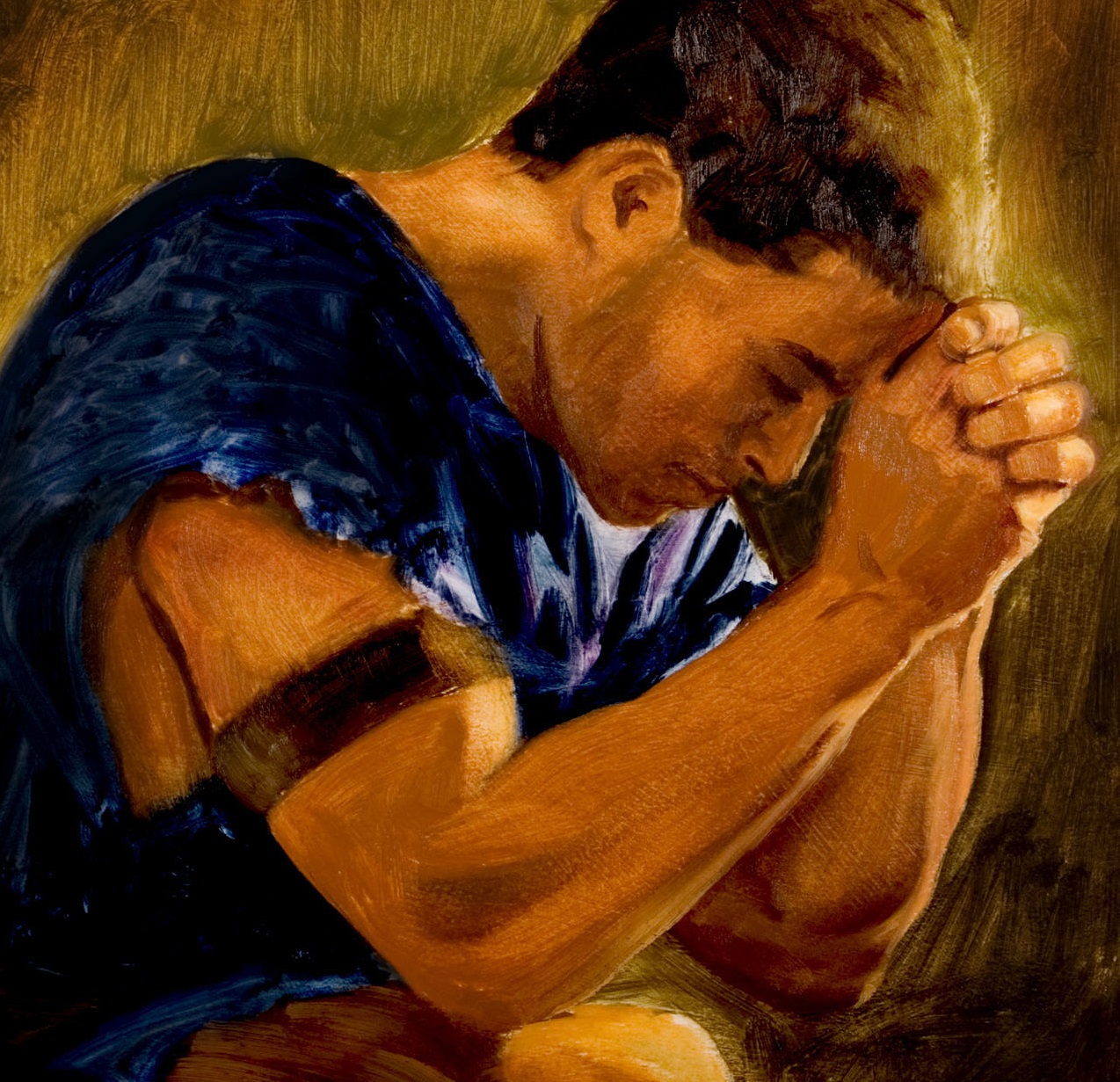
The prophet Enos was the son of Jacob, the brother of Nephi. After the death of his father, he continued the record on the small plates of Nephi. In his brief account, he wrote of how he sought and received forgiveness of his sins and the promise of future blessings for his own people and his enemies, the Lamanites.
Total recorded words -- 997
Insights into words and phrases

When Enos uses the word "power," he refers specifically to the power of God.
The words and phrases "kneeled," "nurture and admonition," "reminding,"
"shaven," "struggling," and "wrestle" are only used by Enos.
Many of the words in the Enos account seem to evoke the biblical
story of Esau and Jacob. Esau and Jacob were twins. Before their birth, they
"struggled together" in their mother’s womb, pointing to the
future conflict between them (Genesis 25:22). Esau became a skilled hunter
(Genesis 25:27). One day, when he came in from the field exhausted and
hungry, Jacob pressured him to sell his birthright (Genesis 25:29-34).
Later, Jacob tricked his father into giving him Esau’s blessing (Genesis
27:1-40). When Esau learned of this, he "hated Jacob" and planned to kill
him, forcing his brother to flee to another land (Genesis 27:41-45).
Years later, when Jacob returned, he was afraid that his brother
might still be angry and want to kill him and his family. Throughout the
night, Jacob "wrestled a man" (an unidentified divine being)
until he received a blessing (Genesis 32:24-25). After his encounter, Jacob
said, "I have seen God face to face, and my life is
preserved" (Genesis 32:30). The following day, instead of
trying to kill him, his brother Esau embraced him, kissed him, and
reconciled with him. In relief, Jacob said, "I have
seen thy face, as though I had
seen the face of God, and thou wast pleased with
me" (Genesis 33:10).
The name Enos means "man." Enos’ father’s
name was Jacob, so it makes sense that he would frame his own story in light
of the biblical Jacob. The Lamanites believed that Nephi and his people had
robbed them of the plates of brass and their right to rule. During Enos’
life, efforts to bring the gospel to the Lamanites were a failure. "Their
hatred was fixed" and "they were continually seeking to destroy us" (Enos
1:20-21). They hunted the Nephites like they hunted wild beasts, but the
Nephites were also naturally prone to do evil (Enos 1:23).
Enos
writes of the "wrestle which [he] had before God" before he
received forgiveness for his sins. He writes of "struggling in
the Spirit" in his prayers for the Nephites and of "many long
strugglings for my brethren the Lamanites" (Enos 1:10-11).
Enos, before his conversion, was a hunter like Esau (Enos 1:3). As he
pondered the words of his father, his soul "hungered" (Enos
1:4). He wrestled against his natural inclinations until he received
blessings. He prayed to God all day and into the night. "The man Enos
wrestle[d] with [was] himself."1 Once converted, he was a new
Enos, a new man.
Having seen God, Jacob marveled
at the preservation of his life. Enos sought the preservation of the Nephite
records so that the Lamanites could one day read them, come to know God, and
receive eternal life (Enos 1:13-15). Having looked back at the old Enos, he
looked forward to his future reunion with his Redeemer: "I rejoice in the
day when my mortal shall put on immortality, and shall stand before him;
then shall I see his face with pleasure" (Enos 1:27).
Personal application
We, too, can become new people, if we are willing to put forth the effort to
seek out our Savior and His Atonement.
1 Matthew L. Bowen,
Name As Key Word: Collected Essays on Onomastic Wordplay and the Temple
in Mormon Scripture
(Salt Lake City: Eborn Books and Interpreter Foundation, 2018), 84.


