
Brief biography
Circa 173 B.C.-91 B.C.
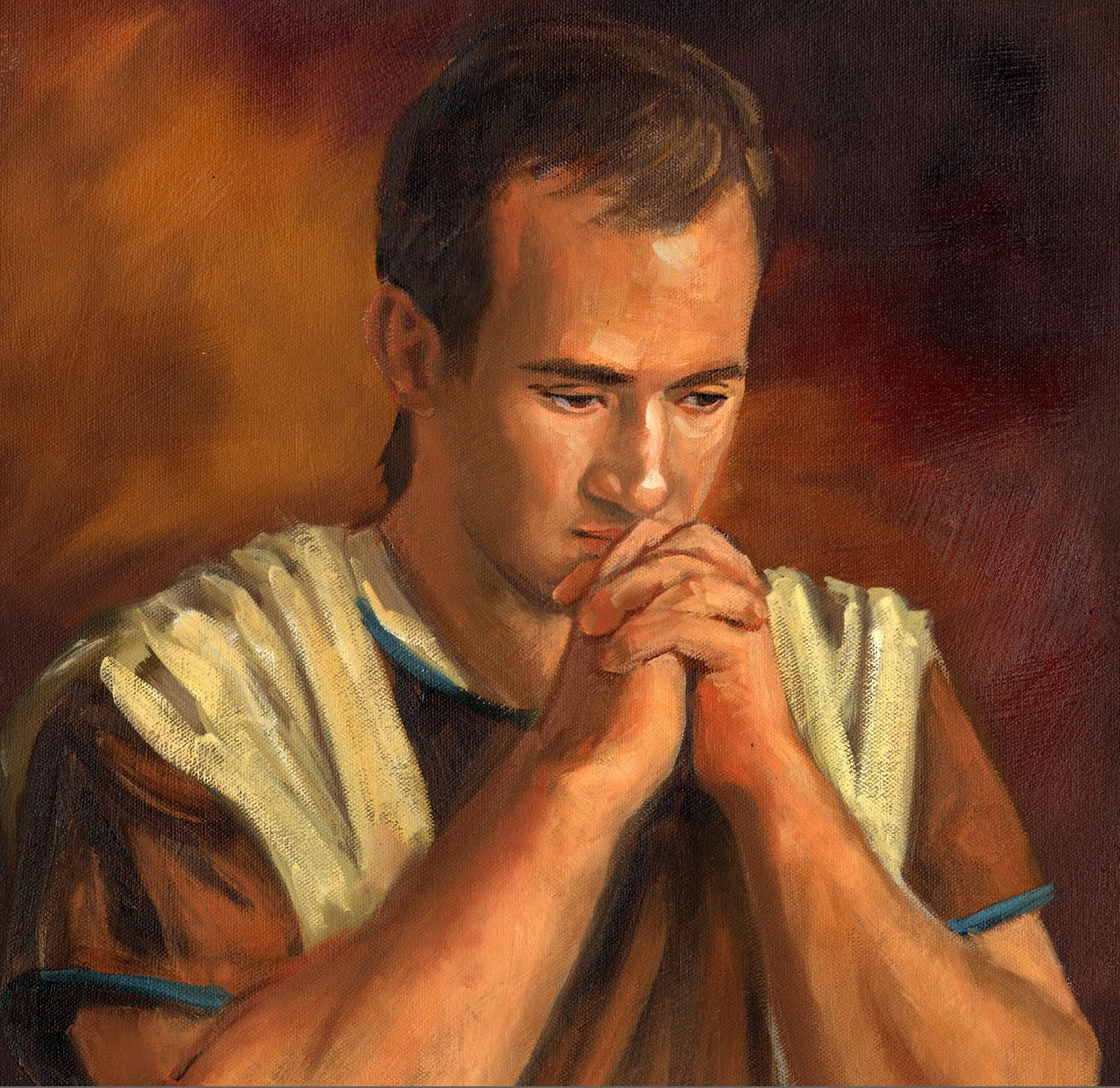
Alma the Elder was a descendant of Nephi. His immediate ancestors were among those who accompanied Zeniff in their resettlement of the lands of Nephi-Lehi and Shilom. When he was still a young man, King Noah appointed Alma as one of his priests. When the prophet Abinadi was brought before King Noah and his court, Alma became convinced of the truth of his words and attempted to persuade King Noah to spare the prophet's life. Noah, angered by Alma's support of the prophet, cast him out and sent servants to try to kill him; but Alma escaped and hid. Alma repented of his sins, recorded the words of Abinadi, and began to secretly teach them to the people. Several hundred people believed in these teachings, so Alma baptized them and organized them into a church at the Waters of Mormon. When King Noah learned of Alma's activities, he sent an army to destroy him and his followers. Alma and his people escaped into the wilderness, where they founded another settlement that they named Helam. Although greatly loved by his people, Alma refused to be their king. They were brought into bondage by a group of Lamanites led by Amulon, one of Noah's former priests, but were miraculously delivered by God. They migrated to the land of Zarahemla, where King Mosiah permitted Alma to organize the Church of God among his people. Alma was a man of great faith and died at the age of 82.
Total recorded words -- 578
Insights into words and phrases

Alma I was a descendant of Nephi. His immediate ancestors were among those who accompanied Zeniff in their resettlement of the lands of Nephi-Lehi and Shilom. When he was still a young man, King Noah appointed Alma as one of his priests. When the prophet Abinadi was brought before King Noah and his court, Alma became convinced of the truth of his words and attempted to persuade King Noah to spare the prophet's life. Noah, angered by Alma's support of the prophet, cast him out and sent servants to try to kill him; but Alma escaped and hid. Alma repented of his sins, recorded the words of Abinadi, and began to secretly teach them to the people. Several hundred people believed in these teachings, so Alma baptized them and organized them into a church at the Waters of Mormon. When King Noah learned of Alma's activities, he sent an army to destroy him and his followers. Alma and his people escaped into the wilderness, where they founded another settlement that they named Helam. Although greatly loved by his people, Alma refused to be their king. They were brought into bondage by a group of Lamanites led by Amulon, one of Noah's former priests, but were miraculously delivered by God. They migrated to the land of Zarahemla, where King Mosiah permitted Alma to organize the Church of God among his people. Alma was a man of great faith and died at the age of 82.
Alma uses the divine title "Almighty God," when he baptizes. This title is
used only four times by four speakers in the Book of Mormon. Alma is the
first to use the words "bonds" and "bonds of iniquity" in the text. Both the
single word and the phrase appear five times. In addition to Alma I, only
Alma the Younger and Mormon use the phrase "bonds of iniquity." Alma uses
each of them once in his 577 words, which is a rate much higher than that in
the rest of the text.
Although we only have 577 words from Alma
I, Abinadi’s influence can still be detected. This suggests that Abinadi’s
words and testimony of Christ were always at the back of Alma’s mind. Alma’s
references to "eternal life" and "the first resurrection"
in his words at the Waters of Mormon (Mosiah 18:9, 13) echo Abinadi’s
testimony before king Noah (Mosiah 15:21-25; 18:9, 13). This is also true of
his reference to Christ’s redemption being "prepared from the foundation of the world"
(Mosiah 15:19; 18:13) and the Lord’s people being identified as those who
are redeemed of God (Mosiah 15:18-19, 23; 18:9).
It is also
interesting to contrast Alma’s positive characterization of the newly
baptized people of the Lord, as those who are willing to serve
God, have righteous desires, and strive to
keep the commandments (Mosiah 18:8, 10), with Abinadi’s
warning against those who go "according to their
own carnal wills and desires" (Mosiah 16:12),
and do not "keep the commandments" (Mosiah 12:33). Here, Alma
takes what he learned from Abinadi’s warning and applies it positively to
the new converts.
Abinadi’s discourse before Noah began with a
passage from Isaiah, which said, "the Lord hath comforted his
people" (Mosiah 12:23). This reminds us of Alma’s observation that the
repentant converts desired "to be called his people" (Mosiah 18:8) and would "comfort those that stand in need
of comfort" (Mosiah 18:9). One way the Lord comforts His
people is through having them minister to one another.
Personal application
Alma clearly continued to study and ponder Abinadi’s words. When you read Alma’s words, you might try to do so in light of Abinadi’s testimony. As you ponder the teachings of these prophets, consider how you might apply their wisdom to new situations as you bless and minister to others.
The Baptismal Covenant and the People of Alma I
When Alma invited those who believed on his words to be baptized, he outlined the practices that exemplified those who were willing to be called the Lord's covenant people. Many years after they were baptized, Alma's faithful group was brought into bondage to the Lamanites. In the midst of their afflictions, the Lord responded to their prayers and covenanted to deliver them from bondage. When we compare Alma's words about the baptismal covenant with the Lord's words when they were in bondage, we find that the Lord covenanted to do what they had earlier been willing to do when they were baptized.
When Alma and his people were baptized, they made a "covenant"
with God, witnessing their willingness to serve Him and keep His
commandments (Mosiah 18:10). When Alma and his people were greatly oppressed
in their bondage to the Lamanites, the Lord heard them and said, "I know of
the covenant which ye have made unto me; and
I will covenant with my people to deliver them out of bondage"
(Mosiah 24:13).
When Alma and his people were baptized, they
were desirous to "come into the fold of God, and to be called
his people" (Mosiah 18:8). Significantly, the Lord twice refers to Alma and his
faithful group as "my people" (Mosiah 24:13-14) when he
covenants to deliver them.
Alma taught that those who entered
into the baptismal covenant should be willing to "comfort
those that stand in need of comfort" (Mosiah 18:9). Later,
when Alma’s people were in bondage to their enemies, the Lord bid them to
"lift up your heads and be of good comfort" (Mosiah 24:13),
and to "be of good comfort, for on the morrow I will deliver
you out of bondage" (Mosiah 24:17).
Those who received the
baptismal covenant were "willing to
bear one another’s burdens, that they may be light" (Mosiah
18:8). Later, when those people were in bondage, the Lord covenanted, "I will also ease the burdens
which are upon your shoulders, that even you cannot feel them upon your
backs, even while ye are in bondage" (Mosiah 24:14). We are then told that
"the burdens which were laid upon Alma and his brethren were
made light; yea, the Lord did strengthen them that they could
bear up their burdens with ease" (Mosiah 24:15).
When they were
baptized, Alma and his people covenanted that they were willing "to
stand as witnesses of God at all times and in all things and
in all places" (Mosiah 18:9). When they were in bondage to the Lamanites,
the Lord told Alma that he would bless and deliver them, "that ye may
stand as witnesses for me hereafter" (Mosiah 24:14).
When we compare Alma’s words about the baptismal covenant with the words of
the Lord to Alma’s people when they were in bondage, we can see that the
Lord did what His people had earlier promised Him that they would do. As
they had covenanted to comfort others and bear their burdens that they might
be light, so the Lord comforted and bore the weight of His people’s burdens
and afflictions that they were made light---to the point that they could not
feel them upon their backs! As they covenanted to be witnesses of God at all
times and places, the Lord blessed them with deliverance that they could
continue to testify of His miraculous mercy and intervention in the future.
Personal application
The words of Alma and the Lord about covenants teach us what it means to be called the Lord’s people. When you read what the Book of Mormon teaches about covenants, pay attention to how those covenant blessings are honored and fulfilled. As part of a covenant people, you can know that the Lord will bless you as he promised, just as you have promised Him to serve and bless others. He often honors those covenants in ways you may not anticipate, sometimes with blessings beyond measure.
Chronology
All dates are approximate.
160-150 B.C. Alma is appointed to be a priest by King Noah.
148 B.C. Alma hears Abinadi’s words when the prophet is brought
before King Noah’s court. He becomes convinced of the truth of the prophet’s
message and urges King Noah to spare his life. King Noah casts Alma out of
his court and sends his servants to slay him. Alma escapes, records
Abinadi’s words, and repents of his sins. He begins to secretly teach the
words of Abinadi to those who will believe.
147 B.C. Alma teaches and baptizes. He organizes the Church of God at
the Waters of Mormon and ordains priests to teach the members of the Church.
145 B.C. Discovered by King Noah, Alma and his followers escape into
the wilderness and establish a settlement at Helam.
145-121 B.C. Alma refuses to be king. His people prosper. They are
brought into bondage by the Lamanites. Because of their great faith, the
Lord lightens their burdens and delivers them from bondage. They escape into
the wilderness and settle in the land of Zarahemla.
120 B.C. King Mosiah permits Alma to establish the Church of God in
the land of Zarahemla.
121-91 B.C. Alma I leads the Church in righteousness. Alma’s son Alma
the Younger rebels against his father and secretly seeks to destroy the
Church. In response to his father’s prayers, an angel appears to Alma and
the sons of Mosiah to stop them in their work of destruction. Alma’s son
repents.
91 B.C. Alma I dies at the age of 82.


